Bangkok and Phuket Floods 2026: What Expats and People Moving to Thailand Need to Know
Bangkok and Phuket floods in 2026: discover flood risks, rainy season impacts, property considerations and practical advice for people moving to Thailand.
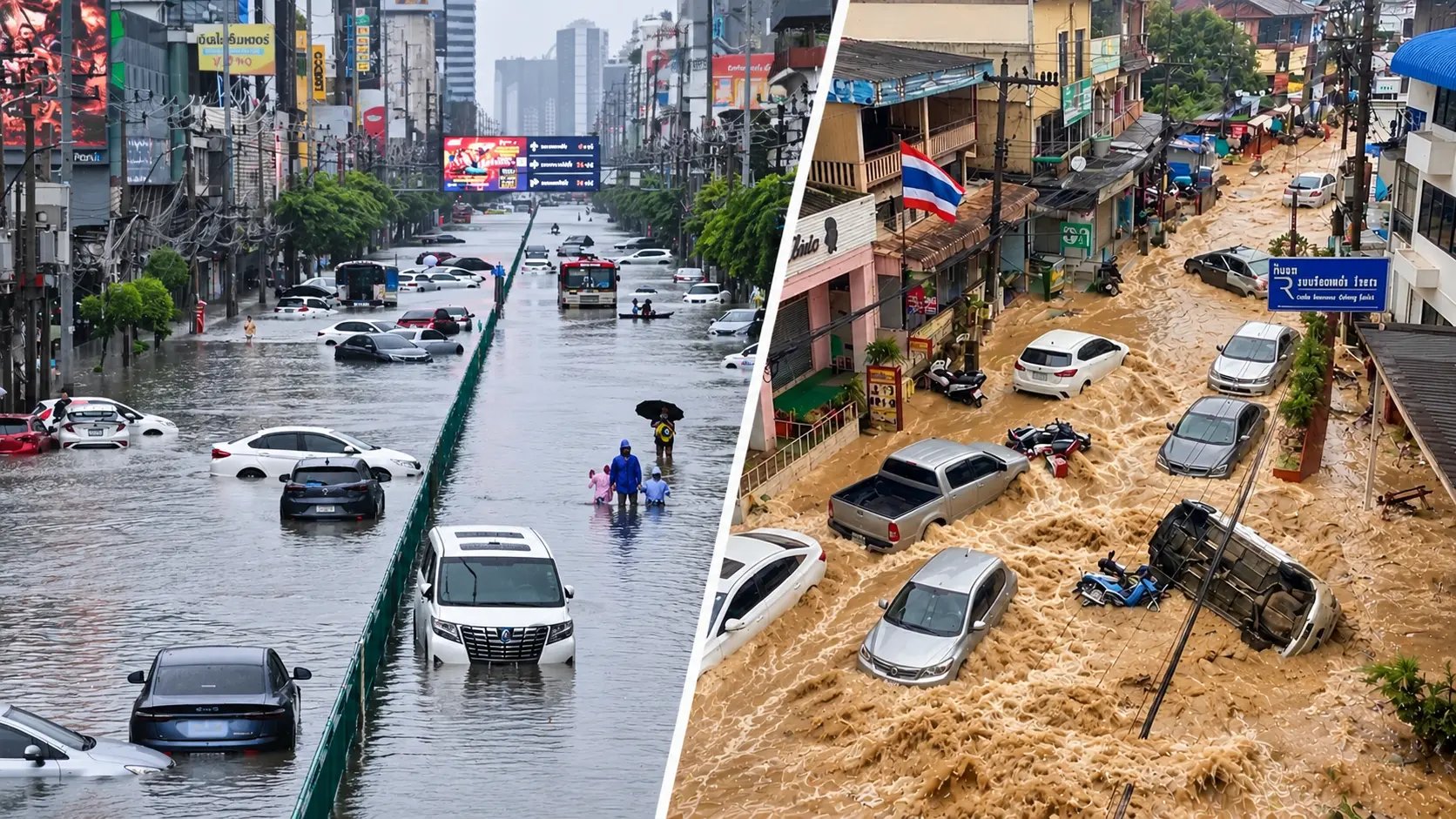
Flooded streets in Bangkok (left) and Phuket (right) during Thailand's 2026 rainy season.
Thailand's 2026 rainy season has been one of the most disruptive in recent memory. Bangkok endured its heaviest rainfall in years in late September, and Phuket was hit by flash floods and mudslides in late October. If you're planning a move to Thailand — or already living here — this guide explains what happened, why it happens, and how to factor flooding into your plans.
What Happened in Bangkok and Phuket in October 2026?
Bangkok and central Thailand. More than 300mm of rain fell on Bangkok in just 48 hours between 24 and 26 September 2026, prompting authorities to declare an emergency across all 50 city districts. A government assessment estimated around 329,000 households — roughly 700,000 Bangkok residents — were affected, with the worst flooding in eastern districts including Lat Krabang, Nong Chok, Min Buri, Prawet, Saphan Sung and Bueng Kum. By late October, the Department of Disaster Prevention and Mitigation (DDPM) reported close to one million people affected across 20 provinces and Bangkok, although water levels were receding in most areas. A separate tidal flood alert for Bangkok and six central provinces ran from 27 October to 5 November, warning of high tides raising Chao Phraya River levels between 6am and 3pm.
Phuket. On 25–26 October 2026, intense overnight rain — 117mm in 24 hours recorded at Ban Na Yai — triggered flash floods and mudslides in Patong's Nanai area, where runoff from the Khao 50 Pi hillside carried rocks and mud onto roads and into homes, shops and vehicles. Damage in Patong was provisionally estimated at 100 million baht. Floodwater had largely drained by the morning of 26 October, but further flooding was reported in Karon on 28 October, and provincial warnings for heavy rain, flash floods and landslides were extended through 29 October.
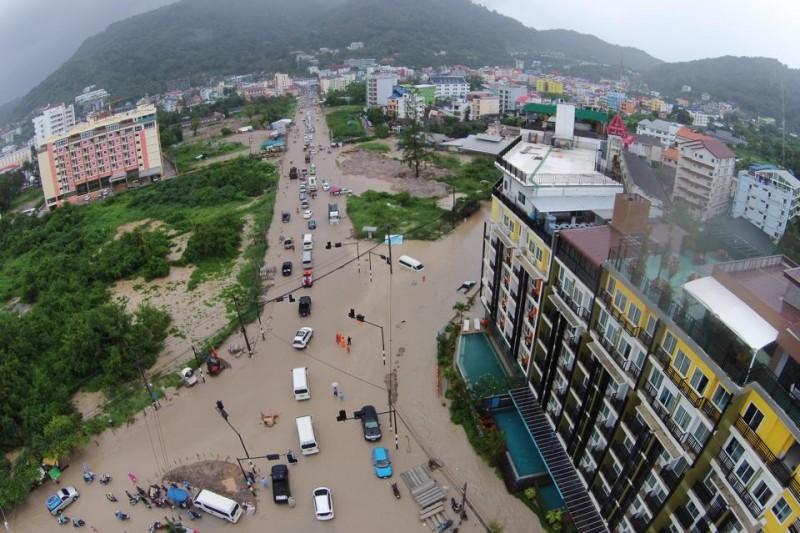
Aerial view of flooding in Patong, Phuket, during the late October 2026 flash floods. Photo: The Phuket News.
A note on timing: the events above are reported news from September–October 2026. Warnings and conditions change daily during the rainy season, so always check the official sources listed below for the current situation rather than relying on any article — including this one.
Why Does Thailand Experience Flooding?
Several factors combine:
- Monsoon rains. The southwest monsoon brings months of heavy rain, and individual storms can dump extraordinary volumes in hours.
- Low-lying terrain. Bangkok sits on a flat river delta barely above sea level, and the Chao Phraya carries water from the entire northern basin through the city to the sea.
- High tides. When monsoon runoff meets seasonal high tides, river and canal levels rise and drainage slows — the reason for the late-October tidal alerts.
- Rapid urbanisation. Concrete replaces ground that once absorbed water, and drainage capacity in some districts hasn't kept pace with development.
- Runoff in hilly areas. In Phuket, steep hillsides like those around Patong can funnel sudden runoff — sometimes carrying mud and debris — into low-lying neighbourhoods.
When Is Flood Season in Bangkok and Phuket?
Thailand's rainy season broadly runs from May to October, but the peak risk differs by region:
- Bangkok and central Thailand: the highest flood risk is typically September to early November, when monsoon rain, northern runoff and high tides overlap — exactly the pattern seen in 2026.
- Phuket and the Andaman coast: the southwest monsoon brings the wettest months from roughly May to October, with September and October often the heaviest.
Localised street flooding from heavy afternoon downpours can happen any time in the wet season and usually drains within hours. The larger events — river flooding in Bangkok, flash floods and landslides in Phuket — are less frequent but more disruptive.
Which Bangkok Neighbourhoods Should You Consider?
The 2026 floods were concentrated in Bangkok's eastern districts — Lat Krabang, Nong Chok, Min Buri, Prawet, Saphan Sung and Bueng Kum — many of them low-lying areas along canals. Low-lying riverside communities outside flood embankments were also flagged in the tidal alerts.
Most areas popular with expats fared better. Inner-city neighbourhoods such as Sukhumvit (Phrom Phong, Thonglor, Ekkamai), Silom, Sathorn and Ari sit on higher, better-drained ground with modern infrastructure — though even central districts can see brief street flooding after extreme downpours. When comparing areas, our Bangkok neighbourhood guides cover each area's character, transport and typical rents, and it's worth asking any landlord or agent directly about a building's flood history.
Renting or Buying Property in Thailand? Check These 7 Things First
Flooding is a practical due-diligence issue, not a reason to panic. Before signing a lease or purchase contract:
- Ask about the building's flood history — has the street or car park flooded in recent years, and how high did the water get?
- Check the floor level. Ground-floor units and shopfronts carry the most risk; even a slightly elevated entrance helps.
- Look at the street, not just the building. A condo on higher ground can still be cut off if surrounding roads flood.
- Ask about drainage and pumps. Modern buildings in flood-prone spots often have flood barriers and pumps — ask to see them.
- Check insurance. If you're buying, confirm what flood cover is available and what it costs.
- Visit during or after heavy rain if you can. Nothing reveals drainage like a real downpour.
- Read the contract carefully. Our guides to renting and buying in Thailand as a foreigner and the rental price guide explain the process in plain language.
What Should You Do During Flooding in Thailand?
- Follow official warnings. The DDPM issues alerts, including Cell Broadcast messages sent directly to phones in affected districts.
- Move belongings and valuables to higher ground if you're in a low-lying area and heavy rain is forecast.
- Avoid driving or walking through floodwater — depth is hard to judge, and water can hide open drains, debris and electrical hazards.
- Take precautions against electric shock in flooded buildings; switch off power at the breaker if water enters.
- Stay out of the sea during storm warnings on the coast — strong winds and high waves accompany the heavy rain.
- Keep essentials ready: drinking water, dry food, medicines, charged power banks and important documents in a waterproof bag.
- Emergency numbers: the DDPM hotline is 1784; tourist police are 1155.
Useful Websites for Flood Updates and Weather Warnings in Thailand
Bookmark these official sources — they carry the current warnings, not historical reporting:
- Thai Meteorological Department — national weather forecasts and heavy-rain warnings
- Thailand Rain Radar — live rainfall radar
- ThaiWater — national water and flood situation reports
- Bangkok Flood Monitoring — city-level flood tracking
- Bangkok Rainfall Monitoring — live rainfall data across Bangkok districts
- Department of Disaster Prevention and Mitigation — disaster warnings and emergency guidance
Should Flooding Stop You From Moving to Thailand?
For most people, no. Flooding is a seasonal, manageable reality of life in Thailand — like hurricanes in Florida or bushfires in Australia. Millions of residents, including large expat communities, live through every rainy season by choosing where they live sensibly, staying informed and following official advice.
What the 2026 season does show is that where you live within a city matters. A well-drained inner Bangkok neighbourhood and a low-lying canal-side district have very different rainy-season experiences. Going in with accurate information — rather than surprises — is the difference between a minor inconvenience and a genuine problem.
Planning to Move to Thailand? Start With the Right Information
From choosing the right neighbourhood to understanding rental costs, visas and everyday living, Key to Thailand helps you research and prepare for your move:
- Compare areas in our Bangkok neighbourhood guides
- Budget with our cost of living research and property and living costs tools
- Understand the process in our renting and buying guides
- Find verified local services in Bangkok Living Essentials
- Explore everything in our relocation guides and Relocation Toolkit
Planning Your Move to Thailand? From choosing the right neighbourhood to understanding rental costs, visas and everyday living, Key to Thailand helps you research and prepare for your move.
Explore Thailand Relocation Guides
Sources: reporting by The Guardian, CNA, The Nation, Thai PBS World, AP News, Bangkok Post, The Phuket News and Thailand's Government Public Relations Department, September–October 2026; warnings data from the Thai Meteorological Department and the Department of Disaster Prevention and Mitigation. This article reports historical events as at 29 October 2026 — check the official sources above for current conditions.
Work out what this means for your budget
Free tools, no sign-up needed.
- Cost of living calculatorMonthly costs for your household in six Thai locations.
- Rental price guideIndicative rents by city, Bangkok area and unit size.
- City comparisonPut up to three places side by side.
- Buying property guideForeign ownership rules, fees and the buying process.
Want the checklists, templates and city guides in one pack? See the relocation toolkit.